

The Art of Conflict Resolution: Strategies for Therapists Working with High-Conflict Couples
Discover expert-backed conflict resolution strategies for therapists working with high-conflict couples, and learn how to de-escalate, guide, and rebuild connection.
Introduction
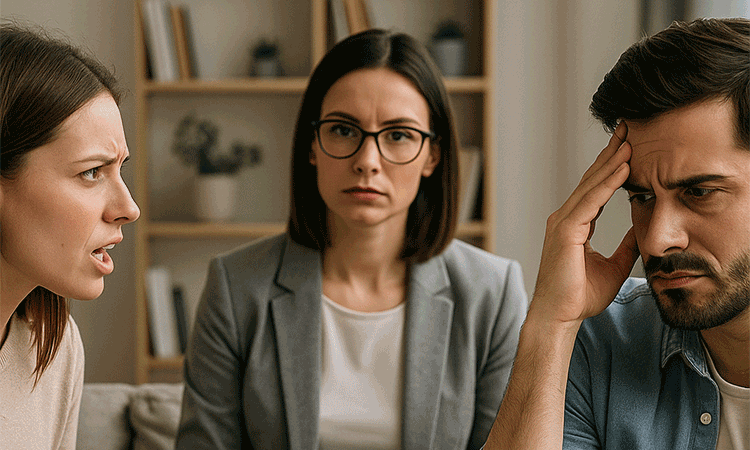
Working with high-conflict couples can test even the most seasoned therapist. These sessions often feature raised voices, rapid escalation, emotional volatility, and entrenched patterns of blame and defensiveness.
But with the right tools, therapists can transform chaos into clarity. By using proven conflict resolution strategies for therapists, clinicians can help clients move from reactivity to reflection—and toward repair.
This post explores practical, evidence-informed techniques to help you manage emotional intensity, restore communication, and guide couples through the turbulence of high-conflict dynamics.
? Want more tools for couples therapy? Explore our upcoming courses.
1. Understanding High-Conflict Couples
High-conflict couples typically present with:
- Chronic arguing and emotional escalation
- Rigid roles (e.g., pursuer/distancer dynamics)
- Unresolved attachment wounds
- History of betrayal, mistrust, or trauma
These dynamics create a cycle of threat-response behaviors: fight, flight, freeze, or fawn. Conflict becomes a pattern, not a problem to be solved.
? Therapist Insight: The goal isn’t to eliminate conflict, but to help couples engage with it constructively.
2. Prioritize Emotional Regulation First
Before any meaningful work can happen, both partners must be regulated enough to access their reflective brains.
Strategies include:
- Pause Techniques: Brief timeouts to interrupt flooding
- Breathing Exercises: Co-regulation via paced breathing (e.g., inhale for 4, exhale for 6)
- Body Awareness: Helping clients notice physiological signs of escalation
- Somatic Anchors: Grounding through touch (e.g., holding the chair, feet on floor)
? External Resource: Greater Good Science Center on Emotion Regulation
? Encourage couples to develop a shared “reset ritual” to use outside of sessions.
3. Create a Structured Communication Framework
Unstructured conversations often lead to chaos. Therapists can introduce simple but effective frameworks to help couples communicate constructively.
Try the Speaker-Listener Technique:
- One partner speaks, the other only listens and reflects
- No interruptions or rebuttals
- Switch roles after each turn
Other models include:
- Nonviolent Communication (NVC)
- Gottman’s Aftermath of a Fight Process
? External Link: Center for Nonviolent Communication
? Frame the work as skill-building, not moral failing.
4. Intervene at the Pattern, Not Just the Content
Most arguments are not about what they appear to be. Instead of getting stuck in the content (“You never take the garbage out”), focus on the relational pattern.
Useful Interventions:
- Reframe: Highlight the underlying needs (e.g., “You want to feel respected.”)
- Track the Cycle: Help partners recognize how their reactions fuel each other
- Use Genograms: To understand inherited conflict styles
- Name the Dance: Externalize the dynamic (e.g., “Here comes the pursuer-distancer spiral again.”)
? Therapist Tip: Use a whiteboard or drawing pad to visually map patterns in session.
5. Teach Repair and Recovery
Conflict isn’t the problem—rupture without repair is. Teaching couples how to reconnect after a fight is one of the most powerful conflict resolution strategies for therapists.
Teach These Steps:
- Acknowledge responsibility
- Validate the partner’s emotions
- Make a concrete repair attempt
- Agree on what each person will do differently next time
? External Link: The Gottman Institute – Making Repair Attempts
? Rehearse repair rituals in session to build muscle memory.
6. Advanced Conflict Resolution Strategies for Therapists
While basic communication frameworks are essential, therapists can draw from advanced conflict resolution strategies for therapists when working with particularly entrenched patterns or complex relationship dynamics. These advanced conflict resolution strategies for therapists can be particularly effective when standard approaches have reached their limits.
Narrative Restructuring
Help couples rewrite their relationship story by:
- Identifying dominant negative narratives (“We always fight about money”)
- Uncovering exceptions to these patterns
- Co-creating alternative narratives that honor both perspectives
- Reinforcing new, more constructive story lines
Differentiation-Focused Techniques
Many high-conflict couples struggle with fusion or emotional reactivity. Advanced differentiation work includes:
- Helping partners identify their own values separate from their partner’s reactions
- Building tolerance for healthy disagreement
- Practicing “I” positions during heated discussions
- Creating boundaries that protect the relationship, not just the individual
Attachment-Informed Interventions
Conflict often activates core attachment wounds. Therapists can:
- Help partners identify their attachment triggers during conflict
- Translate defensive behaviors into attachment needs
- Guide partners to respond to the need, not the behavior
- Create corrective emotional experiences through structured interactions
Culturally Responsive Approaches
Effective conflict resolution strategies for therapists must account for cultural differences in:
- Communication styles and expectations
- Gender roles and power dynamics
- Family involvement and boundaries
- Attitudes toward emotional expression and conflict
? Therapist Tip: Remain humble about your own cultural limitations and invite couples to educate you about their cultural context for conflict.
Mindfulness-Based Conflict Resolution
Integrating mindfulness can transform how couples engage with conflict:
- Practice present-moment awareness during heated exchanges
- Notice thoughts without attachment (“I’m having the thought that…”)
- Use mindful listening without preparing rebuttals
- Cultivate curiosity about emotions rather than reactivity to them
When implementing conflict resolution strategies for therapists, mindfulness serves as both an intervention and a meta-skill that enhances the effectiveness of other techniques.
? External Resource: UCLA Mindful Awareness Research Center
7. Watch for Abuse, Stonewalling, or Emotional Cutoff
High-conflict does not always mean high-engagement. Some couples weaponize silence, withdraw completely, or exhibit coercive control.
Red Flags Include:
- Consistent invalidation or contempt
- Threats of self-harm or violence
- Gaslighting or manipulation
- Patterns of power imbalance
? In these cases, individual therapy or safety planning may be necessary before resuming couples work.
Case Example: Turning Conflict into Connection
Client Couple: Jasmine and Leo, both in their early 40s, presented with chronic conflict about parenting and finances.
Challenges:
- Frequent yelling and emotional shutdowns
- History of infidelity and unresolved betrayal trauma
Interventions Used:
- Introduced pause and grounding rituals
- Practiced the Speaker-Listener framework
- Mapped their conflict cycle using a whiteboard
- Facilitated structured repair dialogues
Outcome:
After 8 sessions, the couple reported fewer explosive arguments and increased emotional safety. Jasmine stated, “We still disagree—but we don’t destroy each other in the process.”
? Key Takeaway: With structure, insight, and practice, even the most reactive couples can learn to de-escalate and reconnect.
Conclusion
Conflict is inevitable—but destruction is not.
When therapists use effective conflict resolution strategies for therapists, they can shift the energy in high-conflict sessions from chaos to collaboration. By helping clients regulate emotions, recognize patterns, and repair ruptures, therapists don’t just manage conflict—they transform it.
✅ Want more tools for working with couples? Browse our on-demand catalog
Technology and Resources to Support Conflict Resolution
Modern therapists can enhance their conflict resolution strategies for therapists by incorporating technology and specialized resources. The digital landscape offers innovative ways to extend conflict resolution strategies for therapists beyond the therapy room.
Digital Tools for Couples
Several evidence-informed apps and platforms can support the work between sessions:
- Gottman Card Decks: Conversation starters and exercises
- Lasting: Guided relationship exercises and check-ins
- ReGain: Supplemental online therapy support
- Talkspace Couples Therapy: Digital worksheets and communication exercises
Assessment Instruments
Structured assessments can provide objective data to inform your conflict resolution approach:
- Gottman Relationship Checkup
- PREPARE/ENRICH Inventory
- Emotion-Focused Therapy Attachment Injury Assessment
- Dyadic Adjustment Scale
Continuing Education for Therapists
To enhance your conflict resolution toolkit, consider specialized training in:
- Emotionally Focused Therapy (EFT)
- The Gottman Method
- Imago Relationship Therapy
- Relational Life Therapy
- Discernment Counseling for couples on the brink
? Professional Development Tip: Join a supervision group focused specifically on high-conflict couples to receive peer support and feedback on challenging cases.
Building a Referral Network
Effective therapists recognize when additional support is needed:
- Psychiatric evaluation for underlying conditions affecting conflict
- Individual trauma therapy when past trauma is fueling current conflict
- Financial planners specializing in couples
- Co-parenting specialists
- Domestic violence resources
? External Resource: International Association of Marriage and Family Counselors
By incorporating these advanced approaches and resources into your practice, you can expand your repertoire of conflict resolution strategies for therapists and provide more comprehensive support for couples navigating complex relationship challenges. Successful implementation of conflict resolution strategies for therapists requires ongoing learning and adaptation to each couple’s unique needs.
Remember: The most powerful tool in conflict resolution is the therapeutic relationship itself—your presence, attunement, and ability to hold hope even when couples have lost sight of it.
✅ Ready to learn more? View upcoming live courses.
? Next Steps:
- Learn more at The Gottman Institute.
- Explore Non-Violent Communication Tools.
- Join our therapist community on LinkedIn and Facebook.